Friday, February 24, 2017

Wednesday, January 25, 2017
Tuesday, January 3, 2017
Thursday, October 13, 2016
Rabbits Vs Guinea Pigs: Which is Better For Kids?
Hi Pet Blog Readers,
Hope you had a great
weekend. Let’s get the week started with an article from guest blogger
Melanie. She has a post for us that should help you out if you are
trying to decide between getting a rabbit or a guinea pig. Each of
these small pets have their own characteristics and behaviors and their
care may suit your personal situation better than the other. Melanie’s
outline of pros and cons should be able to help make your decision a bit
easier. If you have a preference between a rabbit and a guinea pig or
if you have a question or comment, please let us know in the comments
section below. Thanks!
________________A first pet is a very important right of passage for your child. Not only does it make a very cute contribution to your family, it teaches your kids responsibility and to love and respect the animal kingdom. That said, having a pet isn’t always easy. They take looking after, feeding, exercising and immunising.
If you’re thinking of getting a pet for your child, it’s always good to start with something small and manageable. Two great examples are either guinea pigs or rabbits. Both of these animals are relatively low maintenance and your children should be able to take care of most of the responsibilities involved.
Below you will find the pros and cons for each animal, which should help in deciding which to get.
RABBITS
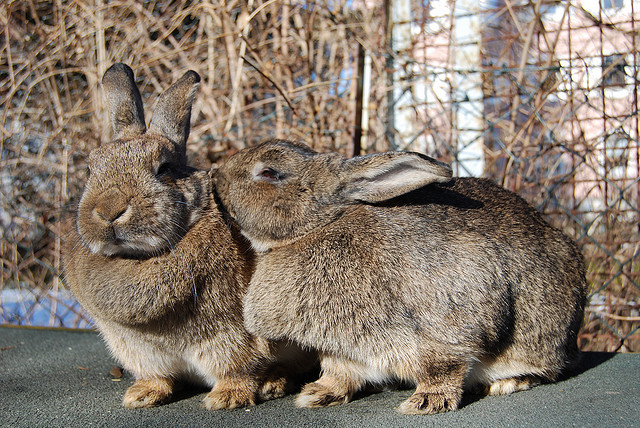
PROS
- They are small in size and can fit in your children’s hands.
- They are gentle and not intimidating for children.
- They feed on dry food, grass and vegetables which is easy to find.
- They require little or no vaccinations.
- They are independent and do their own thing.
- They can exercise in their cage or indoors.
- They show affection to their owners.
- They can be litter boxed trained.
- They can be left to roam.
- They live 8 – 12 years, slightly longer than guinea pigs.
CONS
- They are stubborn animals and training takes time.
- They can be smelly. Hutches need to be cleaned frequently.
- They chew everything they come into contact with so home roaming can be a problem.
- They are susceptible to exposure and in extreme weather may need to stay inside.
- Finding veterinary help for rabbits can be difficult as it’s uncommon.
- They poop a lot and everywhere.
- They will wee on you if given the chance.
- They are very quick and can be hard to catch when returning them to their cage.
- They are rapid breeders so be careful if you have more than one.
 GUINEA PIGS
PROS
- They are small in size and can fit in your children’s hands.
- They do not bite and are even more gentle than rabbits.
- They don’t smell.
- They don’t breed as quickly as rabbits.
- They are independent and do their own thing.
- They can exercise in their cage or indoors.
- They make adorable squeaking noises.
- They are very easy to take care of.
- They live 5 – 8 years, more than smaller rodents.
- They love to be held for hours and are easy to catch.
- They have a great temperament.
CONS
- They can be shy at the beginning and run away from you.
- They require largish cages.
- Cages need to be cleaned frequently.
- They can be noisy so best kept outside.
- They aren’t as simple to feed as rabbits. They need a variety of vegetables, hay, and high quality pellets that you might have to order online.
- They poop and pee without warning.
Author Bio
Melanie is a pet lover and very keen blogger. Over the last few years Melanie has contributed numerous articles on pet care and products. Melanie is currently working on a new pet blog that should be released soon.
Becoming a Tripawd– The Truth About Leg Amputation in Dogs
 For those of you who have been following Barret’s story, he was diagnosed with an aggressive form of canine cancer following a surgery to remove a lump. The only option available that would save his life was to amputate his front left leg. My last post about Barret’s surgery I covered some of the products that were helping us through the recovery stage.
We’re about 3 weeks post-amputation now and I have to admit that Barret is doing even better as an official Tripawd than I anticipated. Every time we take him out in public, we get a barrage of questions about his condition and I’m starting to realize that there are a lot of misconceptions out there about 3 legged dogs and I’d like to set the record straight!
1. Big dogs aren’t candidates for amputation
 Most
of the time, after telling Barret’s story, I am told “It’s lucky he’s
such a small dog, if he were bigger he wouldn’t be doing as
well/wouldn’t have been a candidate for surgery.” FALSE! My new friends
over at Tripawds.com
have shown me that big dogs can do as well as small dogs as tripods.
I’ve read the story of a Great Dane, a Mastiff, several Huskies and
German Shepherds… they’ve done just as well on 3 legs as any of the
small dogs on the site. Some have even fared better than their terrier
counterparts. Size isn’t an issue and I’ve even seen the story of some
older dogs with arthritis that were still able to thrive after
amputation.
Most
of the time, after telling Barret’s story, I am told “It’s lucky he’s
such a small dog, if he were bigger he wouldn’t be doing as
well/wouldn’t have been a candidate for surgery.” FALSE! My new friends
over at Tripawds.com
have shown me that big dogs can do as well as small dogs as tripods.
I’ve read the story of a Great Dane, a Mastiff, several Huskies and
German Shepherds… they’ve done just as well on 3 legs as any of the
small dogs on the site. Some have even fared better than their terrier
counterparts. Size isn’t an issue and I’ve even seen the story of some
older dogs with arthritis that were still able to thrive after
amputation.2. Old & stubborn dogs won’t adapt to 3 legs
FALSE! Dogs are a lot more resourceful and rebound a lot faster than humans. I think a lot of us like to apply human emotion to dogs. If I had to have my arm amputated, it’d be harder for me to adapt than for a dog to adapt to three legs. Dogs don’t over-analyze things or reflect on the past. If your dog wakes up with one less leg tomorrow, he just rolls with the punches and does what needs to be done to carry on being a dog!
Additionally, I’ve never met any pet or human more stubborn than a cat. Cats make wonderful tripawds too! We had a cat in the family that had 3 legs following an accident of some kind (he was adopted with 3 legs) and I’ve met several cats who have lost a limb later in life only to rebound amazingly.
3. Your dog will never be the same after amputation
 I’m
actually going to say TRUE to this one, but not in the way you think.
Your dog will have the same personality, though it takes a few weeks for
the drugs and pain to wear off. They’ll have a different walk, but the
same zest for life, even more if there was pain in the limb that was
amputated.
I’m
actually going to say TRUE to this one, but not in the way you think.
Your dog will have the same personality, though it takes a few weeks for
the drugs and pain to wear off. They’ll have a different walk, but the
same zest for life, even more if there was pain in the limb that was
amputated.I think that Barret is even better than he was before surgery. This entire process has bonded human and canine even closer. Before surgery, he was my “first” dog, my oldest child, so to speak. This process has turned him into my heart dog. I love all my dogs, but Barret and I have a special bond now that can never be broken.
4. Other dogs will tease or attack your dog
FALSE! In my experience, this couldn’t be farther from the truth. I haven’t come across a dog yet that has seemed to even notice that he only has 3 legs. I had to separate my other dogs to keep them from playing too rough. They didn’t seem to understand that he was recovering from anything at all.
5. Recovering from major surgery is too hard on a dog
In my opinion, this is FALSE. I’ve read a lot of other stories of Tripawds who had very “rough” recoveries, but I think it’s the humans in the situation who are having a hard time, not the dogs. I hovered over Barret at home for almost a week after surgery before I realized that the more I hovered, the worse he seemed. He was picking up on my anxiety and fear and becoming anxious. Once I learned not to jump at every noise or move he made (and to leave him alone for a little while) recovery seemed to smooth out. Just take things one day at a time.
Whether you’re considering amputation because of an illness (like cancer) or because of an injury or deformity, I truly believe that almost any dog or cat can adapt to life on three legs. You’ll be truly amazed and inspired by how animals can handle just about anything you throw at them and will make you want to be more like your dog. If you’re not convinced by my tale, hop on over to the Tripawds website and post your situation in the forums and take a moment to browse the user blogs (here’s Barret’s blog). The wonderful caring people on that site will help guide you to the right decision for your beloved pet.
Subscribe to:
Posts (Atom)